|
Heat Sink Basics:
The reason an amplifier has a heavy aluminum outer case (heat sink) is to help dissipate heat. The heat sink is needed because no electronic component is 100% efficient. This is especially true in most audio circuits because they require a voltage drop across the output transistors in order to reproduce the audio signal. As you already know, if there is a voltage drop across a device (wire, transistor... anything) and current flowing through that device, power will be dissipated (in the form of heat) in the device. All semiconductors (transistors, rectifiers, regulators...) which dissipate significant amounts of power are mounted tightly to the heat sink (to provide a thermal connection between the two). You should also know that electronic components become more susceptible to failure as their temperature increases. This is the reason that amplifiers (or any device which supplies or converts power) must have a heat sink. If there were no heat sink, the temperature of the electronic components would quickly reach unsafe levels and they would die a horrible painful death. For example... If an amplifier is taken out of it's heat sink and played at normal volume levels into an otherwise safe speaker load, the amplifier would fail in just a few minutes.
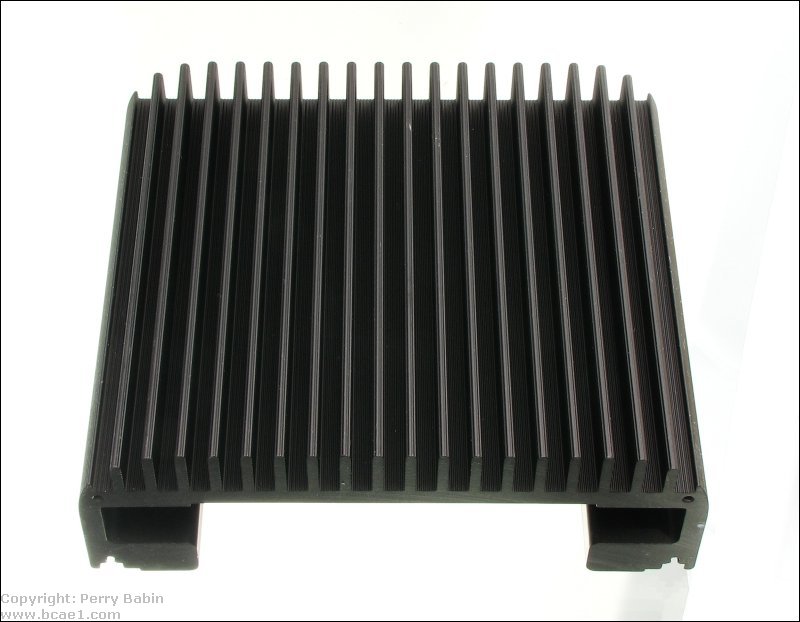
Surface Area:
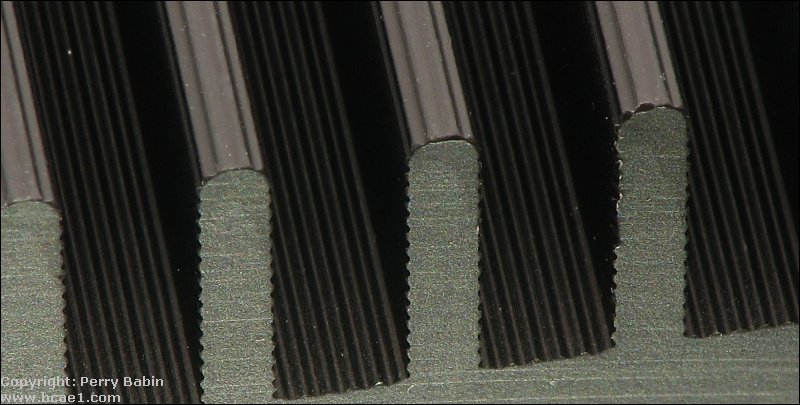
Most heat sinks have fins and/or ridges. The fins are used to increase the surface area. The extra surface area allows more metal to come into contact with the air which allows the heat to be dissipated more quickly. This heatsink has added small ridges to the fins to further increase the surface area.
NOTE:
Do not paint a heat sink. Most heat sinks are anodized aluminum. Painting a heat sink (especially if it's a thick coat of paint) is like putting a blanket on the amplifier. If you absolutely must paint the heat sink, use the lightest, thinnest coat of paint possible.
Thermal Conductors and Electrical Insulators
Thermal Heatsink Compound:
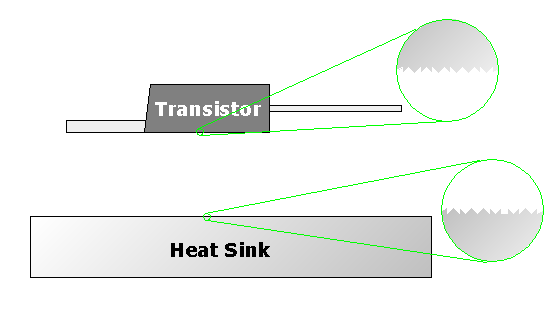
No matter how good production methods are, the metal surfaces of the heat sink and the metal mating surface of the semiconductor will not be perfectly smooth (as shown below). When mating semiconductors to a heat sink, you'll generally use a 'heat sink compound' (the white grease that you often see when you open an amplifier or other electronic device with high power dissipation) between the metal surfaces to help fill in the microscopic irregularities. Without the grease (compound), the effective surface contact/area would be greatly diminished and result in higher semiconductor operating temperatures and therefore higher failure rates of the semiconductors. This metal to metal contact (no insulator between the sink and the semiconductor) is the most efficient way to transfer the heat from the semiconductor to the sink (except for soldering or welding the 2 pieces together).
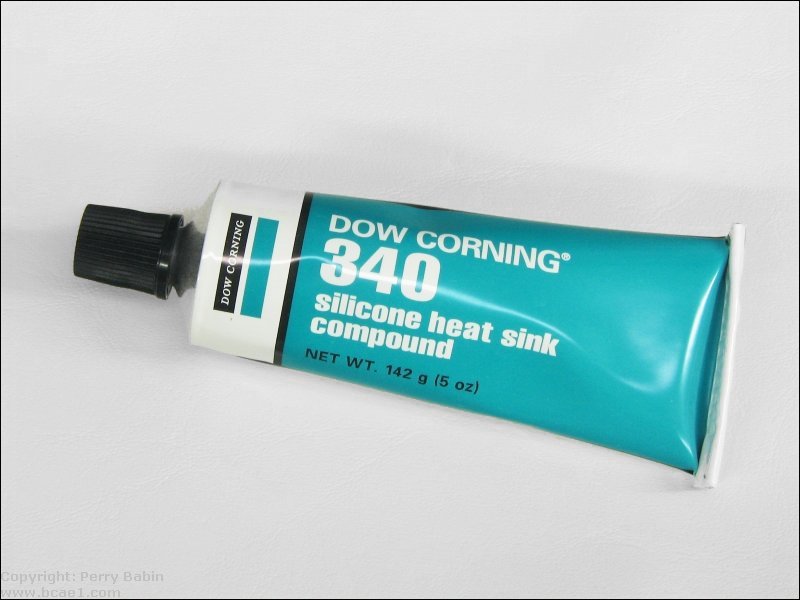
I use and recommend Dow Corning 340.
Mica Insulators:
Mica is a hard clear crystalline material that can be split into thin sheets. It is a very good electrical insulator and a good thermal conductor. It's used to insulate semiconductors from a heat sink. If the heat sink is electrically conductive, you must have some sort of insulator between the semiconductor and the sink to prevent a short circuit. The following 2 images show a semiconductor and its respective mica insulator.

Kapton©/polyimide:
Polyimide film is used by some manufacturers for electrical insulators. It is an amber colored film that can handle temperatures as high as 800°F. The following photo shows what polyimide film looks like. It's available on rolls or in sheets.

This close-up shows the surface of a strip of Kapton that has had heatsink compound pre-applied.

Sil-Pads:
Sil-pads come in a few different varieties. The most common is a silicone rubber material reinforced with fiberglass. A different version has 2 thin silicone layers sandwiching a layer of polyimide film. The following is an example of a glass reinforced sil-pad. Many manufacturers use sil pads because they don't require grease to perform to spec (which makes assembly quicker and easier). All others listed on this page require thermal grease to properly conduct heat.
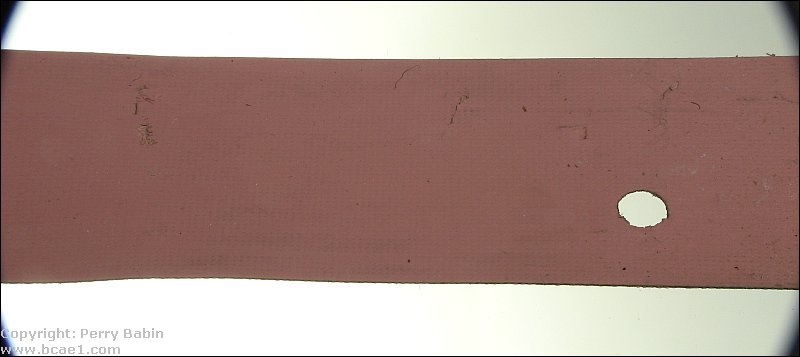
This lets you see the surface texture. The weave that you see is from the fiberglass fabric in the core of the insulator.

Metallic Insulators:
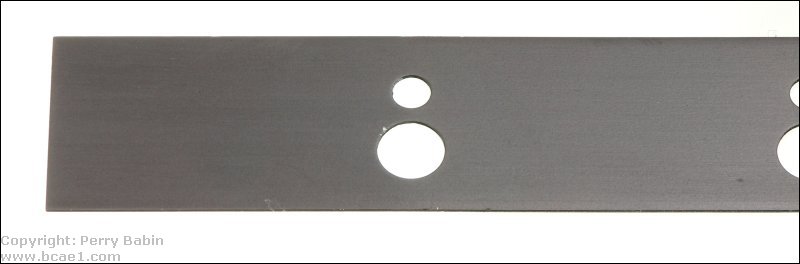
Some manufacturers use a metallic insulator like anodized aluminum. The anodizing process creates a thin aluminum oxide layer which is an electrical insulator. This is a very effective thermal conductor. The following is an example of a metallic insulator that was used in a Rockford amplifier.
Ceramic Insulators:
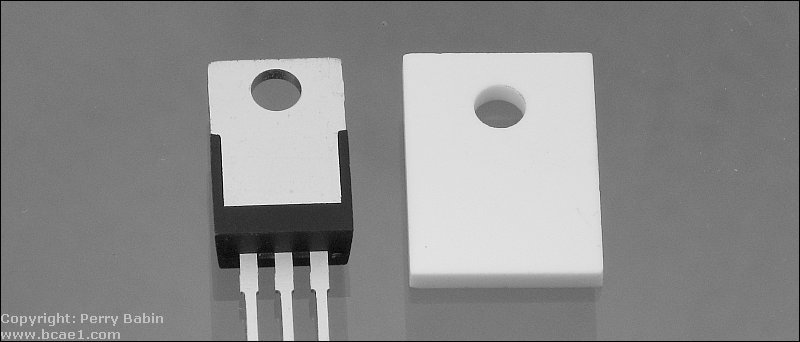
Ceramic insulators are more expensive than most insulators so they're rarely used. When they are used, it's generally because the transistor needs to be a bit more isolated from the heatsink. One example is in a class D amp. When the output transistors use mica insulators, the heatsink radiates significant high frequency electrical noise. With the ceramic insulators, the radiated noise is significantly less.
Thermal Impedance/Resistance:
Some electrical insulators are more efficient than others in transferring heat from a semiconductor to the heat sink. The thermal transfer efficiency is expressed by the formula Rth=°C-in²/W and says that... for every square inch of area, the temperature will rise a given number of degrees Celcius for every watt of dissipation. If the specification says 0.5°C/W and you have 10 watts of dissipation, the temperature of the semiconductor is is going to be 5°C higher than the heat sink. From best to worst (of the types listed) I prefer... aluminum oxide, mica, Kapton and lastly sil-pads. Remember that the formula expresses the RATE that the insulator can conduct the heat. All of them can transfer the heat but some can do it more quickly.
|





